Is Your Child’s Smile Healthy? A Complete Dental Guide for Parents in Abu Dhabi 

As a parent, you already juggle a million priorities. But here is one that deserves a top spot on your list: your child’s oral health. Healthy teeth and gums in childhood are not just about a pretty smile — they affect how children eat, speak, learn, and feel about themselves. And the habits formed in the first few years of life set the foundation for a lifetime of dental wellness. 

At LLH Hospital’s Little Stars Pediatric Clinic, our child-friendly dental specialists and pediatric doctors are here to make every visit a positive one — and to give parents the tools they need to raise cavity-free, confident kids.

Why Children’s Dental Health Matters More Than You Think 

Baby teeth are not just temporary placeholders. They guide the growth of permanent teeth, support proper speech development, and allow children to chew nutritious foods that fuel brain and body growth. Cavities in baby teeth can cause pain, infections, and even affect the development of adult teeth beneath the gumline. 

In the UAE, dental decay is one of the most common childhood health issues, often linked to dietary habits, bottle feeding at bedtime, and inconsistent brushing. The encouraging truth: nearly all childhood cavities are preventable with the right habits, starting early. 

When Should My Child’s First Dental Visit Be? 

The answer surprises many parents: by their first birthday, or within 6 months of the first tooth appearing — whichever comes first. Early visits allow our Little Stars dental specialists to spot problems before they develop, familiarize your child with the dental environment in a calm, reassuring way, and give you personalized guidance on brushing, diet, and fluoride. 

Many parents wait until a child has a full set of teeth or — worse — until there is pain. By then, intervention is more complex and more distressing for the child. Early visits prevent that entirely. 

The “Happy Mouth” Formula: Simple Habits for Lifelong Smiles 

1. Start Early — Even Before the First Tooth 

Oral care begins before teeth appear. Gently wipe your baby’s gums with a clean, damp cloth after feeding. Once the first tooth erupts, use a soft-bristled infant toothbrush with a smear of fluoride toothpaste. 

Parent Tip: Make brushing part of your child’s daily routine — morning and bedtime — just like bath time. 

2. Make Brushing Fun, Not a Chore 

Children respond better to excitement than instruction. 

✔ Use colorful toothbrushes with favorite characters 
✔ Play a 2-minute brushing song 
✔ Brush together as a family 
✔ Use reward charts for consistency 

When brushing feels like playtime, resistance reduces dramatically. 

3. Master the Right Technique 

For kids under 6, parents should supervise brushing. 

✔ Use a pea-sized amount of fluoride toothpaste 
✔ Brush gently in circular motions 
✔ Cover all surfaces — front, back, and chewing areas 
✔ Don’t forget the tongue 

Flossing should begin once teeth start touching each other. 

4. Watch the Sugar 

Frequent sugary snacks and drinks increase the risk of cavities. Sticky candies, juice boxes, and flavored milk can damage enamel if consumed regularly. 

Healthier Alternatives: 

  • Fresh fruits 
  • Cheese and yogurt 
  • Water instead of juice 
  • Nuts (if age-appropriate) 

Encourage rinsing the mouth with water after sweet treats. 

5. Schedule Regular Dental Visits 

The first dental visit is recommended by age one or within six months of the first tooth appearing. Early visits help children become comfortable with the dental environment. 

At LLH Hospital’s Little Stars Pediatric Clinic, our child-friendly dental team ensures: 

✔ Gentle dental examinations 
✔ Preventive fluoride treatments 
✔ Cavity detection and management 
✔ Parental guidance on oral hygiene 
✔ Positive, stress-free experiences 

Early preventive care reduces the need for complex treatments later. 

Quick Age-by-Age Dental Guide for Parents 

Use this simple reference to know what to focus on at each stage: 

Age Key Focus LLH Recommendation 
0–12 months Gum wiping, first tooth brushing First dental visit by age 1 
1–3 years Fluoride toothpaste, diet habits 6-monthly check-ups begin 
3–6 years Supervised brushing, flossing intro Sealants & fluoride treatments 
6–12 years Independent brushing (supervised) Orthodontic assessment if needed 
12+ years Flossing, mouthwash, lifestyle Routine care + teen-specific advice 

Signs Parents Should Not Ignore 

Watch for: 

  • White or brown spots on teeth 
  • Persistent bad breath 
  • Bleeding gums 
  • Tooth pain or sensitivity 
  • Thumb sucking beyond age 4 

Early intervention prevents long-term complications. 

Why Families Choose Little Stars at LLH Hospital

Little Stars Pediatric Clinic at LLH Hospital Abu Dhabi & Musaffah was designed with one goal in mind: to make children feel safe, heard, and even excited about their health. Our team combines pediatric medicine with dental care in a warm, child-centred environment. 

  1. Child-friendly clinic environment — bright, welcoming spaces designed to reduce anxiety 
  1. Experienced dental specialists trained in treating young patients 
  1. Preventive treatments including fluoride varnish, fissure sealants, and diet counselling 
  1. Parent education at every visit — because your daily routine is the most powerful tool 
  1. Coordinated care with pediatricians for children with special health needs 

Building Confidence Through Preventive Care 

Dental fear often starts in childhood. A positive early experience shapes a child’s attitude toward healthcare for life. 

At LLH Hospital Abu Dhabi & Musaffah, we focus on: 

  • Child-centered communication 
  • Friendly, reassuring environments 
  • Minimal discomfort procedures 
  • Parental involvement 

Because when children feel safe, they cooperate — and smiles come naturally. 

FAQs — Parents’ Most Common Questions 

1. When should my child first visit a dentist? 
By age one or within six months of the first tooth erupting. 

2. Is fluoride safe for children? 
Yes — when used in the recommended amount. Fluoride strengthens enamel and prevents cavities. 

3. How often should kids see the dentist? 
Every 6 months for routine check-ups and cleaning. 

4. Are baby teeth cavities serious? 
Yes. Untreated cavities can cause pain, infections, and affect permanent teeth development. 

5. What if my child is afraid of the dentist? 
Choose a pediatric-friendly environment like LLH’s Little Stars Clinic, where experienced professionals make visits calm and comfortable. 

Conclusion: A Happy Mouth Means a Healthy Start 

Oral health is not just about teeth — it supports nutrition, speech, confidence, and overall well-being. 

By starting early, making brushing enjoyable, limiting sugar, and scheduling routine dental visits, parents can build lifelong habits that protect their child’s smile. 

At LLH Hospital Abu Dhabi & Musaffah, we are proud to partner with parents through our Little Stars Pediatric Clinic — nurturing healthy smiles from the very first tooth. 

Book Your Child’s Dental Check-Up Today 

📞 Call to schedule an appointment with our Dental doctors team 
📍 Visit LLH Hospital, Abu Dhabi & Musaffah 
🌐 Book online at: https://llhhospital.com/abu-dhabi/, https://llhhospital.com/musaffah/

Healthy Smiles Start Here — Because Every Little Star Deserves to Shine Bright. 

Our Experts

See More
Fareeha Suhail
Vinu Nassimudeen
Megha Jain
Pinku Alen Mathew 

Smile Bright: Why Oral Health Is the Gateway to Your Overall Well-being 

Most of us brush our teeth to avoid cavities or keep our breath fresh. But here is what many people don’t realise: your mouth is a mirror of your overall health. The bacteria in your gums, the inflammation in your tissues, the state of your teeth — they all send signals far beyond your smile.  

At LLH Hospitals in Abu Dhabi and Muaffah, our Dental and Cardiology specialists want you to understand the powerful — and sometimes life-saving — connection between oral hygiene and your body’s most vital systems. 

The Mouth-Body Connection: Why It Matters 

Your mouth is home to millions of bacteria. While many are harmless, poor oral hygiene can allow harmful bacteria to multiply, leading to gum disease (periodontitis). 

When gum infections persist: 

  • Inflammation spreads beyond the mouth 
  • Bacteria can enter the bloodstream 
  • Systemic health conditions may worsen 

This is why maintaining good oral hygiene is not just about preventing cavities — it is about protecting your overall health. 

Studies suggest that people with gum disease are at a higher risk of developing cardiovascular conditions, including heart disease and stroke. 

How Are They Connected? 

✔ Chronic gum inflammation increases overall body inflammation 
✔ Oral bacteria may enter the bloodstream and affect blood vessels 
✔ Inflammation may contribute to plaque buildup in arteries 

For patients already managing high blood pressure or heart disease, untreated gum infections may increase complications. 

At LLH Hospital’s Cardiology Department, patients are encouraged to adopt preventive lifestyle habits — and oral hygiene is an important part of that strategy. 

Diabetes and Dental Health: A Two-Way Relationship 

Diabetes and oral health share a complex relationship. 

How Diabetes Affects Oral Health: 

  • High blood sugar levels increase the risk of gum infections 
  • Slower healing after dental procedures 
  • Increased risk of dry mouth and oral infections 

How Poor Oral Health Affects Diabetes: 

  • Gum disease makes blood sugar harder to control 
  • Chronic inflammation may worsen insulin resistance 

This two-way relationship means that managing one condition supports the other. Patients with diabetes should prioritize routine dental check-ups as part of their long-term health plan. 

At LLH Hospital’s Internal Medicine and Dental teams, coordinated care ensures comprehensive diabetes management. 

Signs Your Oral Health May Be Affecting Your Body 

Signs of Gum Disease to Never Ignore: 

  1. Bleeding gums when brushing or flossing 
  1. Persistent bad breath not relieved by brushing 
  1. Swollen, red, or tender gums 
  1. Gums pulling away from teeth (receding gums) 
  1. Loose or sensitive teeth 

If you have any of these symptoms, book a dental review at LLH Hospital today. 

If you have diabetes, hypertension, or heart disease, these symptoms should not be ignored. 

Preventive Dental Care at LLH Hospital, Abu Dhabi and Musaffah 

Our Dental Department offers comprehensive services designed to prevent, diagnose, and treat oral health conditions: 

✔ Routine dental check-ups and professional cleaning 
✔ Gum disease diagnosis and treatment 
✔ Dental fillings, crowns, and restorative care 
✔ Preventive education for children and adults 
✔ Oral health guidance for diabetic and cardiac patients 

By combining dental care with cardiology and internal medicine expertise, LLH Hospital ensures a holistic approach to patient wellness. 

Practical Tips to Protect Your Oral and Heart Health 

The steps that protect your oral health also benefit your cardiovascular and metabolic health. Our dental team at LLH Hospital recommends: 

  • Brush twice daily with fluoride toothpaste and floss at least once a day 
  • Schedule a professional dental clean and check-up every 6 months 
  • Inform your dentist if you have diabetes, heart disease, or are on blood thinners 
  • Manage blood sugar diligently — it directly impacts your gum health 
  • Avoid smoking, which dramatically worsens both gum disease and heart risk 
  • Stay hydrated — dry mouth accelerates tooth decay and gum problems 
  • Monitor blood pressure and cholesterol regularly 

Prevention remains the most powerful tool in safeguarding both your smile and your heart. 

Comprehensive Care at LLH Hospital, Abu Dhabi and Musaffah 

At LLH Hospital, we take a whole-body approach to your health. Our Dental and Cardiology departments work alongside Internal Medicine to ensure that conditions like gum disease are never treated in isolation, because your body never works in isolation. 

  1. Dental Department: Full preventive, restorative, and periodontal care; advanced gum disease treatment; oral health screening for diabetic and cardiac patients 
  1. Cardiology Department: Cardiovascular risk assessment, hypertension management, and cardiac screening in the context of systemic inflammation 
  1. Internal Medicine: Integrated diabetes management including oral health monitoring as part of metabolic care 

FAQs 

1. Can brushing my teeth really help protect my heart? 

Yes, consistent oral hygiene reduces the bacterial load in your mouth, limiting the amount of inflammation-triggering bacteria that can enter your bloodstream. While brushing alone is not a substitute for cardiac care, it is a meaningful, evidence-backed part of cardiovascular risk reduction. 

2. I have Type 2 diabetes. How often should I visit the dentist? 

Diabetic patients are advised to visit the dentist every 3–4 months, rather than the standard 6-month interval, due to their heightened susceptibility to gum disease and slower healing. Always inform your dentist about your diabetes and current blood sugar levels. 

3. Is gum disease reversible? 

Early-stage gum disease (gingivitis) is fully reversible with professional cleaning and improved oral hygiene at home. Advanced gum disease (periodontitis) can be managed and halted but not fully reversed. Early intervention at LLH Hospital’s Dental Department makes a significant difference in outcomes. 

4. Should I tell my cardiologist about my dental problems? 

Absolutely. Your cardiologist should be aware of any active gum disease, recent dental infections, or upcoming major dental procedures. Conversely, your dentist needs to know about any heart conditions, pacemakers, or blood-thinning medications before proceeding with treatment. 

5. Are dental treatments safe for heart patients? 
Yes. With proper evaluation and communication between your dentist and cardiologist, dental treatments can be safely managed. 

6. Does treating gum disease improve blood sugar control? 
Studies indicate that treating periodontal disease may help improve blood sugar management in diabetic patients. 

7. What are early signs of gum disease? 
Bleeding gums, swelling, tenderness, and persistent bad breath are common early signs. Does LLH Hospital offer dental care for patients with heart conditions? 

Yes. LLH Hospitals’ dental team is experienced in managing patients with complex medical backgrounds, including cardiovascular disease and diabetes. Our integrated approach means your dental care is coordinated with your Cardiology and Internal Medicine teams. Visit llhhospital.com/abu-dhabi to learn more or book an appointment. 

Conclusion: A Healthy Smile, A Healthier You 

Oral health is not isolated from the rest of your body — it is deeply connected to your heart, metabolism, and overall wellness. 

By prioritizing dental hygiene, you are actively protecting your cardiovascular system and supporting diabetes management. 

At LLH Hospital, Abu Dhabi, our Dental and Cardiology Departments work hand in hand to deliver integrated, preventive care — because your smile truly reflects your health. 

Take the First Step Toward Better Health 

📞 Book your dental consultation at LLH Hospital today 
📍 Visit us in Abu Dhabi & Musaffah 
  

Smile bright. Live healthy. Protect your heart — starting today. 

Our Experts

See More
Megha Jain
Pinku Alen Mathew 
Megha Jain
Pinku Alen Mathew 
Arun Hari
Jose John
Jamuna Devi
Megha Jain
Pinku Alen Mathew 
Arun Hari
Jose John
Jamuna Devi
Heenana Mustaheena 

The Link Between Diabetes, Hypertension, and kidney disease

What Every Patient in Abu Dhabi Needs to Know 

Every year, World Kidney Day reminds us that our kidneys — two small organs with enormous responsibilities — deserve consistent care and attention. In the UAE, where Type 2 diabetes and hypertension are highly prevalent, kidney disease is becoming increasingly common yet remains largely preventable

At LLH Hospital, Abu Dhabi & Musaffah, our Nephrology, Internal Medicine, and Urology departments work together to safeguard your kidney health through early screening, timely diagnosis, and comprehensive management. 

Why World Kidney Day Matters 

World Kidney Day is a global campaign dedicated to raising awareness about kidney health, identifying risk factors, and encouraging preventive habits. Kidneys help: 

  • Filter toxins and waste from the blood 
  • Maintain fluid and electrolyte balance 
  • Regulate blood pressure 
  • Support bone and metabolic health 

When kidney function declines, the impact on overall health can be serious and sometimes life‑threatening. 

At LLH Hospital, our priority is to educate the community — especially residents of Abu Dhabi and Musaffah — about preventing kidney disease through awareness and early intervention. 

The Diabetes–Hypertension–Kidney Disease Connection 

1. How Diabetes Affects the Kidneys 

Type 2 diabetes is one of the leading causes of Chronic Kidney Disease (CKD) worldwide. High blood sugar levels gradually injure the tiny blood vessels (glomeruli) responsible for filtering waste. This damage can lead to diabetic nephropathy, which often progresses silently until advanced stages. 

Key Features of Diabetic Kidney Disease 

  • Protein in urine (proteinuria) 
  • Increased strain on kidney filters due to high blood sugar 
  • Gradual progression to CKD 

Warning Signs 

  • Foamy urine 
  • Swelling of legs or ankles 
  • Fatigue 
  • Reduced urine output 

Because symptoms often appear late, regular kidney screening is essential for all patients with diabetes. 

2. Hypertension’s Role in Kidney Damage 

Uncontrolled high blood pressure (hypertension) puts continuous strain on the kidneys. Over time, this damages their delicate blood vessels and reduces their filtering capacity. 

Why Hypertension Damages Kidneys 

  • Increased pressure on renal blood flow 
  • Reduced filtration efficiency 
  • Faster progression of CKD 

In some patients, kidney disease itself causes high blood pressure — creating a harmful cycle that requires early diagnosis and continuous management. 

3. The Interlinked Trio: Diabetes, Hypertension & CKD 

When diabetes and hypertension coexist, the risk of developing CKD is significantly higher. 

✔ Diabetes damages kidney filters 
✔ Hypertension damages blood vessels 
✔ Together, they accelerate kidney decline 

Understanding this connection helps patients take proactive steps before irreversible damage occurs. 

Key Risk Factors for Diabetic Kidney Disease in the UAE: 

Poorly controlled blood sugar (HbA1c above 7%) 
Blood pressure consistently above 130/80 mmHg 
Family history of kidney disease or diabetes 
Obesity and sedentary lifestyle 
High-salt, high-fat dietary patterns 
Delayed or irregular medical check-ups 

Symptoms of Kidney Impairment to Watch For 

Kidney disease often progresses silently. Many patients experience no symptoms until severe damage has occurred. 

Seek medical attention if you notice: 

  • Persistent fatigue or weakness 
  • Swelling of feet, ankles, or face 
  • Changes in urine appearance or frequency 
  • Loss of appetite or nausea 
  • Persistent itching 

At LLH Hospital, you receive coordinated care from Internal Medicine specialists, Nephrologists, and Urologists — all working together to detect and manage kidney disease early. 

Expert Kidney Care at LLH Hospitals, Abu Dhabi and Musaffah 

At LLH Hospital, Abu Dhabi & Musaffah, we provide comprehensive kidney care supported by a multidisciplinary team. Our approach ensures that every patient benefits from the combined expertise of Nephrology, Internal Medicine, and Urology — all under one roof. 

Our Specialized Services Include: 

    🔹 Department of Nephrology 

  • Expert diagnosis and management of chronic kidney disease (CKD), diabetic nephropathy, hypertensive kidney disease, and electrolyte disorders.
  • Early detection programs for high‑risk individuals (diabetes, hypertension, family history) 

    🔹 Department of Internal Medicine 

  • Integrated management of diabetes and hypertension to reduce kidney damage.
  • Personalized treatment plans focusing on long‑term metabolic health 

    🔹 Department of Urology 

  • Evaluation and treatment of urinary tract issues that impact kidney health.
  • Management of kidney stones, urinary obstruction, and recurrent UTIs 

    🔹 Advanced Diagnostic Services 

  • eGFR and creatinine testing 
  • Urine albumin‑to‑creatinine ratio (UACR) 
  • Renal ultrasound and imaging 
  • Comprehensive kidney function panels 

With early detection, most kidney damage can be slowed — and in some cases prevented entirely. Our team ensures every patient receives timely, accurate, and compassionate care at both our Abu Dhabi and Musaffah facilities. 

How LLH Hospitals Support Kidney Health 

At LLH Hospital, we believe in a holistic and preventive approach to kidney wellness. Our goal is to empower patients to take control of their health through awareness, early diagnosis, and lifestyle optimization. 

🔹 Comprehensive Consultations 

  • Thorough assessment by nephrologists and internal medicine specialists 
  • Evaluation of kidney function, cardiovascular risks, and metabolic health 

🔹 Advanced Diagnostic Testing 

  • Blood tests, urine tests, and renal imaging 
  • GFR assessments to identify early kidney decline before symptoms occur 

🔹 Chronic Disease Management 

  • Diabetes control 
  • Blood pressure monitoring and optimization 
  • Medication guidance and adjustments based on kidney function 

🔹 Urology Support 

  • Management of urinary tract complications 
  • Treatment of kidney stones and prostate‑related issues affecting kidney drainage 

Our structured care pathways ensure consistent follow‑up and personalized treatment, enabling patients to manage chronic conditions more effectively. 

Preventive Strategies for Kidney Health 

Kidney disease is often silent — but prevention is powerful. Whether you have diabetes, hypertension, or simply want to protect your long‑term health, these strategies can significantly reduce your risk: 

✔ Maintain healthy and stable blood sugar levels 
✔ Monitor and control your blood pressure 
✔ Stay well‑hydrated throughout the day 
✔ Follow a low‑salt, balanced diet rich in fruits and vegetables 
✔ Exercise regularly and maintain a healthy weight 
✔ Quit smoking and avoid excessive alcohol 
✔ Get routine kidney function tests, especially if you’re high‑risk 

These small, consistent habits help keep your kidneys functioning well for years to come. 

Frequently Asked Questions (FAQs) 

1. Can kidney disease be reversed? 
Chronic kidney disease can often be slowed — and sometimes stabilized — with proper treatment and lifestyle changes. However, advanced kidney damage is usually irreversible. 

2. How often should I check my kidney function? 
If you have diabetes or hypertension, you should undergo kidney function testing at least once in 3 months or more frequently based on your doctor’s recommendation. 

3. Is high blood pressure always a symptom of kidney disease? 
Not always. Hypertension may be a cause or a consequence of kidney disease. Regular screenings help detect problems early. 

4. Can diet help prevent kidney disease? 
Yes. A kidney‑friendly diet — low in salt, processed foods, and sugary drinks — supports both kidney and overall health. 

5. Should I see a nephrologist or primary care doctor first? 
Start with an internal medicine specialist. If tests show kidney-related concerns, you will be referred to a nephrologist for specialized care. 

Conclusion: Protect Your Kidneys — Protect Your Life 

The strong link between diabetes, hypertension, and kidney disease highlights why preventive care is essential. By understanding your risks, maintaining healthy habits, and seeking timely medical advice, you can safeguard your kidney health. 

This World Kidney Day, LLH Hospital, Abu Dhabi & Musaffah, is committed to helping you take proactive steps toward lifelong wellness. 

Book your kidney health evaluation today 

Our Experts

See More
Harminder Singh
Shehnas Puthiyaveettil Abu
Parvez Mohammad Zarif
Krishnamurthy Hegde
Rakesh Panjwani 
Harminder Singh
Shehnas Puthiyaveettil Abu
Parvez Mohammad Zarif
Krishnamurthy Hegde
Rakesh Panjwani 
Mohammed Saheed Cherukareth Saifuddin
Vipul Bakshi
Ashraf Naguib Botros
Abeesh Padmanabha Pillai
Jyothsnadevi
Suchitra N
Sajjad Khan
Nilofer Samed
Arif V P
Abeesh Padmanabha Pillai
Jyothsnadevi
Suchitra N
Sajjad Khan
Nilofer Samed
Arif V P
P K Gopinath Menon
Jaipal
Deepak Chandran B. Nair

International Women’s Day: Because Your Health Is Your Right

Every year, International Women’s Day reminds us to celebrate strength, resilience and progress. But beyond the flowers and appreciation posts lies something more powerful — a woman’s right to health. 

At LLH Hospitals and Medical Centers, we believe empowering women which starts with awareness and action. Preventive health screenings are not optional luxuries — they are essential steps toward long-term well-being, early detection and confident living. 

This Women’s Day, let’s shift the focus inward. Let’s talk about prevention. 

Why Preventive Screenings Matter for Women 

Women often prioritize family, work and responsibilities over their own health. However, many serious conditions — including breast cancer, cervical cancer, osteoporosis, thyroid disorders and heart disease — can be detected early through regular screenings. 

Early detection means: 

  • Better treatment outcomes 
  • Less invasive procedures 
  • Lower healthcare costs 
  • Greater peace of mind 

Routine health check-ups are not just medical appointments — they are acts of self-care and empowerment. 

Essential Preventive Screenings Every Woman Should Consider 

Here is a breakdown of the key screenings, our specialists at LLH Hospital recommend, by health area: 

1. Breast Health Screening 

Breast cancer is one of the most common cancers in women globally, yet when caught early, survival rates exceed 90%. Do not wait for a lump to appear — screenings can detect changes years before symptoms develop. 

  1. Clinical Breast Exam: Recommended annually from age 25. 
  1. Mammogram: Recommended every 1–2 years from age 40 (or earlier if you have a family history of breast cancer). 
  1. Breast Self-Awareness: Ask your LLH doctor to guide you on how to do monthly self-examinations at home. 

At LLH Hospital, advanced imaging technology and expert radiologists ensure accurate, reliable results in a comfortable setting. 

2. Cervical Cancer Screening (Pap Smear & HPV Test) 

Cervical cancer is highly preventable with routine screening. Regular check-ups allow our expert team to catch issues early, manage hormonal changes and support you through every stage of life — from reproductive years through menopause and beyond. 

  1. Pap Smear (Cervical Smear): Every 3 years from age 21 (or as advised) to screen for cervical cancer. 
  1. HPV Test: Often combined with the Pap smear; recommended from age 30 onwards. 
  1. Pelvic Ultrasound: To detect fibroids, ovarian cysts or irregularities in the uterus. 

3. Comprehensive Gynecological Care 

Routine gynecological visits are essential at every stage of life — from adolescence to menopause. 

These visits may include: 

  • Menstrual health assessment 
  • Family planning counselling 
  • Fertility evaluations 
  • Menopause management 
  • Hormonal health checks 

Regular consultations help address concerns early and support overall reproductive wellness. 

4. Bone Health & Osteoporosis Screening 

Women are significantly more vulnerable to osteoporosis than men, particularly after menopause. Bone density loss is silent, it causes no pain until a fracture occurs. Early diagnosis allows preventive treatment and lifestyle modifications. 

  1. DEXA Scan (Bone Density Test): Recommended at menopause onset or from age 50. 
  1. Vitamin D & Calcium Blood Tests: Especially relevant in the UAE, where indoor lifestyles may contribute to deficiency. 

5. Heart Health & Metabolic Screening 

Heart disease is the leading cause of death in women worldwide — yet it is widely underdiagnosed because symptoms in women can be subtler than in men. Metabolic conditions like diabetes and thyroid dysfunction also disproportionately affect women. 

  1. Blood Pressure Check: At every routine visit; more frequently if elevated. 
  1. Cholesterol (Lipid Profile): From age 20, especially with risk factors such as diabetes or obesity. 
  1. Blood Sugar / HbA1c: To screen for Type 2 diabetes, which is prevalent in the UAE. 
  1. Thyroid Function Test (TSH): Women are 5–8x more likely than men to develop thyroid problems. 
  1. BMI & Waist Circumference Assessment: Key markers for cardiovascular and metabolic risk. 

Quick Reference: Screening Guide by Age 

Use this simple guide to know what to ask for at your next appointment: 

Age Group Priority Screenings Why It Matters 
20s–30s Pap smear, HPV test, blood pressure, STI screen, breast exam Establish baseline health; catch early reproductive issues 
40s Mammogram, pelvic ultrasound, lipid profile, blood sugar, thyroid Peak risk period for several cancers and metabolic conditions 
50s+ DEXA scan, full cardiac workup, mammogram, colonoscopy Menopause raises osteoporosis & cardiovascular risk significantly 

Breaking Barriers: What Stops Women from Getting Screened? 

We hear these concerns every day at LLH Hospital — and we want to address them directly: 

  1. “I feel fine — I don’t need a check-up.” Many serious conditions have no symptoms in early stages. That is precisely why screenings exist. 
  1. “I’m too busy.” Most screenings take less than an hour. One appointment today can save months of treatment tomorrow. 
  1. “I’m nervous about what they might find.” We understand. Our team is trained to provide compassionate, respectful care. Knowledge is power — and early detection gives you the most options. 
  1. “I’m not sure it’s culturally appropriate.” LLH Hospitals have female physicians and nurses available. Your comfort and dignity are our priority. 
  1. “It’s too expensive.” Many screenings are covered under UAE insurance plans. Our team can help you navigate your coverage. 

Women’s Health Services at LLH Hospitals and Medical Centers, Abu Dhabi 

At LLH Hospitals, our multidisciplinary team of gynecologists, radiologists, endocrinologists and internal medicine specialists work together to provide comprehensive women’s health services under one roof. 

With patient-centered care, advanced diagnostics and a supportive environment, we ensure every woman feels heard, respected and cared for. 

Whether you’re in Abu Dhabi city or Musaffah, accessible and quality healthcare is within your reach. 

FAQs About Women’s Preventive Screenings 

1. How often should I undergo a general health check-up? 
Most women should consider an annual health check-up. However, frequency may vary based on age, medical history and risk factors. 

2. Are mammograms painful? 
Mammograms may cause brief discomfort but are generally well tolerated. The procedure is quick and highly beneficial for early detection. 

3. When should I start cervical cancer screening? 
Screening typically begins at age 21. Your doctor will advise on the recommended interval based on your health profile. 

4. Do I need screening if I feel healthy? 
Yes. Preventive screenings are designed to detect silent conditions before symptoms develop. 

5. Can I book multiple screenings in one visit? 
Yes. LLH Hospital offers comprehensive women’s health packages that combine multiple tests for convenience. 

Conclusion: This Women’s Day, Choose Yourself 

Empowerment begins with awareness. Strength begins with prevention. 

This International Women’s Day, make a commitment to your “Right” to Health. Regular check-ups are not just medical steps — they are declarations of self-worth and responsibility. 

You care for everyone else. Now it’s time to care for you. 

Take the First Step Today 

Book your preventive health screening at LLH Hospitals and Medical Centers, Abu Dhabi and prioritize your well-being. 

Schedule your consultation with our experienced gynecologists.

Your Health. Your Right. Your Time is Now. 

Our Experts

See More
Sajira Bhasi
Rushin Kadeeja Mather
Zulfiya Shabnam
Alkeen Anwar
Alka Batar
Sajira Bhasi
Rushin Kadeeja Mather
Zulfiya Shabnam
Alkeen Anwar
Alka Batar
Munir Pasha Nazir Sayed
Meenu Jeswin
Megha Tiwari
Sanket Shah
Ranjita Das
Meera Jayasankar
Mrudhula Peta
Fathima Ahmed Koya
Nandini Menon
Meera Jayasankar
Mrudhula Peta
Fathima Ahmed Koya
Nandini Menon
Dova Madhavi
Punnya Rajkumar
Rajesh Paraswani
Dharmesh Kumar
Jaya Lakshmi 
Meera Jayasankar
Deepa Veeraraghavan
Jaya Lakshmi 
Meera Jayasankar
Deepa Veeraraghavan
Madeha Hussain
Lubna Maroof
Lubna Maroof
Rushin Kadeeja Mather

Health Empowerment in Action: How LLH Hospitals & Medical Centers Support Women’s Wellness at Every Stage

LLH Hospital & related Medical Centers, renowned for compassionate patient-centered care, is dedicated to empowering women across Abu Dhabi and Musaffah to live healthier, fuller lives. This International Women’s Day, we celebrate women’s health by highlighting how health empowerment in action makes quality care accessible, comprehensive, and tailored to every stage of a woman’s journey — from adolescence to motherhood and beyond. 

Why Health Empowerment Matters in Women’s Wellness 

Health empowerment means that every woman — irrespective of background, age or circumstance — has access to essential health services without barriers. Women often juggle multiple roles and responsibilities, placing their own wellness at the bottom of the list. At LLH Hospitals & Medical Centers, we change that narrative by ensuring equitable access to preventive care, specialist consultations and personalized wellness packages designed specifically for women. 

In celebration of International Women’s Day, it’s time to acknowledge that a healthier woman contributes to a healthier family, community and nation. 

Comprehensive Wellness Across Every Stage of Life 

Women’s health needs aren’t static — they evolve. LLH Hospital’s & Medical Centres’ multidisciplinary approach ensures seamless care through each phase of their life: 

1. Adolescent & Young Adult Wellness 

Your healthcare journey begins early. From menstrual health guidance to nutrition consultations and preventative health education, LLH Hospitals & Medical Centers support young women with evidence-based care and trusted expertise. 

Key Services Include: 
✔ Nutritional counseling 
✔ Vaccinations (including HPV screening guidance) 
✔ Reproductive health education 

2. Reproductive & Gynecological Health 

Whether planning a pregnancy, managing menstrual irregularities, or seeking routine gynecological care, women benefit from expert care delivered with respect and understanding. 

Women’s Wellness Highlights: 

  • Comprehensive gynecological exams 
  • Pap smear & HPV screenings 
  • Fertility assessments and counselling 
  • Hormonal and contraceptive care 

Early detection and routine checkups are instrumental in preventing long-term complications. 

Specialized Maternity Care: Preparing for Life’s Biggest Journey 

Motherhood is an extraordinary chapter — and it deserves exceptional care. 

At LLH Hospitals & Medical Centres, we provide comprehensive maternity care packages designed with comfort, safety and wellness at the heart of every plan. 

Maternity & Prenatal Wellness Packages Include: 

✔ Antenatal consultations with experienced obstetricians 
✔ Regular ultrasounds & fetal health monitoring 
✔ Nutritional and lifestyle counselling for pregnancy 
✔ Personalized birth plans 
✔ Postpartum care & lactation support 

Our goal is to ensure every mother feels confident and supported — physically and emotionally — throughout her pregnancy . 

Post-Menopausal and Long-Term Wellness 

Women’s healthcare continues beyond maternity. LLH Hospitals & Medical Centres offer targeted screenings and wellness programs to manage age-related health concerns and reduce future risk. 

Post-Menopausal Support Includes: 

  • Bone health & osteoporosis screening 
  • Cardiovascular risk assessments 
  • Hormone balance evaluations 
  • Lifestyle and diet planning 

Continuity of care means a woman’s health is never left to chance — no matter her age. 

Preventive Screenings: Early Detection Saves Lives 

Preventive health is a cornerstone of LLH Hospitals & Medical Centres’ approach to women’s wellness. Routine screenings catch conditions early — often before symptoms appear. 

Essential Women’s Screenings Offered: 
✔ Breast health screenings & mammograms 
✔ Cervical cancer screening (Pap and HPV testing) 
✔ Thyroid function tests 
✔ Metabolic & hormonal panels 

Regular checkups are acts of empowerment — tools that allow women to take control of their health outcomes. 

How LLH Hospitals & Medical Centres Ensure Health Empowerment for Women 

We believe equitable care means providing: 

✔ Accessible Services: 

Convenient locations in Abu Dhabi and Musaffah with flexible appointment options. 

✔ Multilingual & Culturally Sensitive Care: 

Respect for diverse cultures ensures women feel comfortable and heard. 

✔ Experienced Specialists: 

From obstetricians and gynecologists to endocrinologists and radiologists, our team collaborates closely to tailor care plans for everyone. 

✔ Supportive Environment: 

Healthcare that is compassionate, dignified and patient-focused — always. 

FAQs — Your Health Questions Answered 

1. What is included in women’s wellness checkups at LLH Hospitals & Medical Centres? 
Women’s wellness checkups include comprehensive health assessments, preventive screenings, personalized counselling and follow-up plans based on individual needs and age group. 

2. When should I start getting regular breast screenings? 
Most women are advised to begin clinical breast screening at age 40, or earlier if there is a family history of breast cancer. Your healthcare provider will recommend the best schedule for you. 

3. Are maternity packages customizable? 
Yes — LLH Hospitals & Medical Centres’ maternity packages are tailored to each woman’s medical needs, lifestyle and pregnancy stage. 

4. How often should women have gynecological checkups? 
Annual gynecological exams are generally recommended. However, frequency may vary based on age, health history, and wellness goals. 

5. Can I book multiple services for one visit? 
Absolutely — LLH Hospitals & Medical Centres offer coordinated care packages that may include screenings, consultations in one streamlined visit. 

Conclusion: Your Health, Your Right — Celebrated and Supported 

At LLH Hospitals & Medical Centres, health empowerment isn’t just a concept — it’s practiced every day through compassionate care, specialized health packages and a deep commitment to women’s empowerment. 

This International Women’s Day, make a promise to yourself: put your health first. Every check-in, screening and consultation is a step toward a healthier future. 

Act Today — Schedule Your Women’s Wellness Consultation 

Book your appointment with our women’s health specialists 

Our Experts

See More
Sajira Bhasi
Rushin Kadeeja Mather
Zulfiya Shabnam
Alkeen Anwar
Alka Batar
Sajira Bhasi
Rushin Kadeeja Mather
Zulfiya Shabnam
Alkeen Anwar
Alka Batar
Munir Pasha Nazir Sayed
Meenu Jeswin
Megha Tiwari
Sanket Shah
Ranjita Das
Meera Jayasankar
Mrudhula Peta
Fathima Ahmed Koya
Nandini Menon
Meera Jayasankar
Mrudhula Peta
Fathima Ahmed Koya
Nandini Menon
Dova Madhavi
Punnya Rajkumar
Rajesh Paraswani
Dharmesh Kumar
Jaya Lakshmi 
Meera Jayasankar
Deepa Veeraraghavan
Jaya Lakshmi 
Meera Jayasankar
Deepa Veeraraghavan
Madeha Hussain
Lubna Maroof
Lubna Maroof
Rushin Kadeeja Mather

Ramadan Work Hours in the UAE: How Professionals Can Stay Energized and Productive

Ramadan brings a meaningful shift in daily routines — especially for urban professionals balancing fasting, work responsibilities, family life, and spiritual commitments. Shortened working hours can be beneficial, but fatigue, dehydration, disrupted sleep, and altered meal timings may affect productivity and focus. 

At LLH Hospital, Abu Dhabi, our health experts emphasize that with the right strategies, professionals can maintain performance, energy, and well-being throughout the holy month. Here is a practical guide to achieving a healthy work-life-fast balance during Ramadan. 

Understand Your Body’s Energy Cycles 

Fasting changes how your body uses energy. Blood sugar levels fluctuate, hydration decreases during the day, and sleep patterns shift due to late-night prayers and early Suhoor. 

Most people experience: 

  • Peak alertness in the morning after Suhoor 
  • Reduced concentration in the afternoon 
  • Fatigue late in the day before Iftar 

Plan demanding tasks during your highest energy window — usually the first half of the workday. 

Optimize Your Suhoor for Sustained Productivity 

A balanced Suhoor helps prevent energy crashes and mental fog during working hours. 

Ideal Suhoor Choices for Professionals 

  • Complex carbohydrates (oats, whole grains) for slow energy release 
  • Protein sources (eggs, yogurt, nuts) for satiety 
  • Fruits rich in potassium to support hydration 
  • Plenty of water 

Avoid sugary foods and excessive caffeine, which can lead to energy crashes and increased thirst. 

Structure Your Workday Strategically 

Shorter working hours require smarter planning rather than faster work. 

Productivity tips: 

  • Prioritize critical tasks early in the day 
  • Break projects into smaller, manageable steps 
  • Schedule meetings in the morning when possible 
  • Use task lists to maintain focus 
  • Avoid multitasking, which drains mental energy 

Clear planning reduces stress and prevents last-minute fatigue. 

Manage Sleep for Mental Clarity 

Sleep disruption is one of the biggest challenges during Ramadan. Late Iftar, night prayers, and early Suhoor can reduce total sleep time. 

Healthy sleep habits: 

  • Take short power naps (20–30 minutes) if possible 
  • Maintain a consistent sleep schedule 
  • Limit screen exposure before bedtime 
  • Keep your sleeping environment cool and dark 

Quality sleep supports memory, decision-making, and mood stability at work. 

Stay Hydrated Between Iftar and Suhoor 

Even mild dehydration can impair concentration and productivity. 

Smart hydration strategies: 

  • Drink water regularly throughout the evening 
  • Include soups and hydrating fruits 
  • Limit caffeinated beverages 
  • Avoid very salty foods 

Proper hydration helps prevent headaches, fatigue, and irritability. 

Maintain Light Physical Activity 

While intense exercise during fasting hours is not advisable, gentle movement improves circulation and reduces stiffness from long desk hours. 

  • Short walks after Iftar 
  • Light stretching 
  • Desk mobility exercises 

Physical activity also promotes better sleep quality. 

Protect Your Mental Well-Being 

Balancing work and fasting can increase stress, especially in fast-paced urban environments. 

Support your mental health by: 

  • Practicing mindfulness or prayer breaks 
  • Setting realistic expectations 
  • Communicating workload concerns early 
  • Avoiding overcommitment during Ramadan 

Remember, productivity is about effectiveness — not exhaustion. 

Create a Supportive Work Environment 

Employers and teams often adjust schedules during Ramadan. Make the most of these accommodations. 

  • Use flexible hours wisely 
  • Coordinate with colleagues for task coverage 
  • Schedule collaborative work when everyone is most alert 

A supportive workplace improves both morale and performance. 

Frequently Asked Questions (FAQs) 

1. How can I stay focused at work while fasting? 
Eat a balanced Suhoor, prioritize tasks early, stay hydrated at night, and ensure adequate sleep. 

2. Is it normal to feel less productive during Ramadan? 
Yes. Energy fluctuations are natural, but proper planning can minimize productivity loss. 

3. Should I consume caffeine to stay alert? 
Moderate intake after Iftar is acceptable, but excessive caffeine can disrupt sleep and increase dehydration. 

4. Are power naps beneficial during Ramadan? 
Short naps can significantly improve alertness and cognitive performance. 

5. When is the best time to exercise during Ramadan for professionals? 
Light exercise after Iftar is generally safest and most comfortable. 

Prioritize Your Health This Ramadan 

If fatigue, dizziness, sleep problems, or existing medical conditions interfere with your daily functioning, professional medical advice can help you maintain both productivity and well-being. 

At LLH Hospital, Abu Dhabi, our physicians in Family Medicine and General Medicine Departments provides comprehensive health assessments and detailed consultations to support you throughout Ramadan. 

Book your appointment today

Our Experts

See More
Asim Mannan
Zakia Naz
Louie Gray
Akmar Jebin Valiya Parambath
Sapna Kumari Kantesh
Asim Mannan
Zakia Naz
Louie Gray
Akmar Jebin Valiya Parambath
Sapna Kumari Kantesh
Asim Mannan
Humaira Iqbal

A Comprehensive Guide to Hernia Symptoms and Effective Treatment Solutions 

A hernia occurs when an organ or tissue pushes through a weak spot in the surrounding muscle or connective tissue. While hernias are common—affecting millions of people worldwide—many individuals delay seeking treatment due to lack of awareness about symptoms or fear of surgery. At LLH Hospital Abu Dhabi, our experienced general and laparoscopic surgeons specialize in diagnosing and treating all types of hernias using advanced, minimally invasive techniques. 

Understanding the different types of hernias, recognizing their symptoms, and knowing when to seek medical attention can prevent serious complications and ensure optimal outcomes. This comprehensive guide will help you identify hernia symptoms and understand your treatment options at LLH Hospital. 

What is a Hernia? 

A hernia develops when internal organs or tissues protrude through a weakened area in the muscle wall that normally contains them. Think of it like a tire with a weak spot—when pressure builds up, the inner tube pushes through the weakened area, creating a bulge. 

Hernias can occur in various locations throughout the abdomen and groin area. While some hernias cause minimal discomfort, others can lead to severe complications if left untreated. 

Why Do Hernias Occur? 

Hernias develop due to a combination of muscle weakness and strain. Common contributing factors include: 

  • Congenital weakness present from birth 
  • Age-related muscle deterioration 
  • Injury or surgical incisions 
  • Chronic coughing or sneezing 
  • Pregnancy and childbirth 
  • Obesity and excess abdominal pressure 
  • Heavy lifting without proper technique 
  • Chronic constipation and straining 
  • Fluid accumulation in the abdomen 

Common Types of Hernias 

Understanding the different types of hernias is crucial for proper identification and treatment. Here are the most common types our surgeons treat at LLH Hospital: 

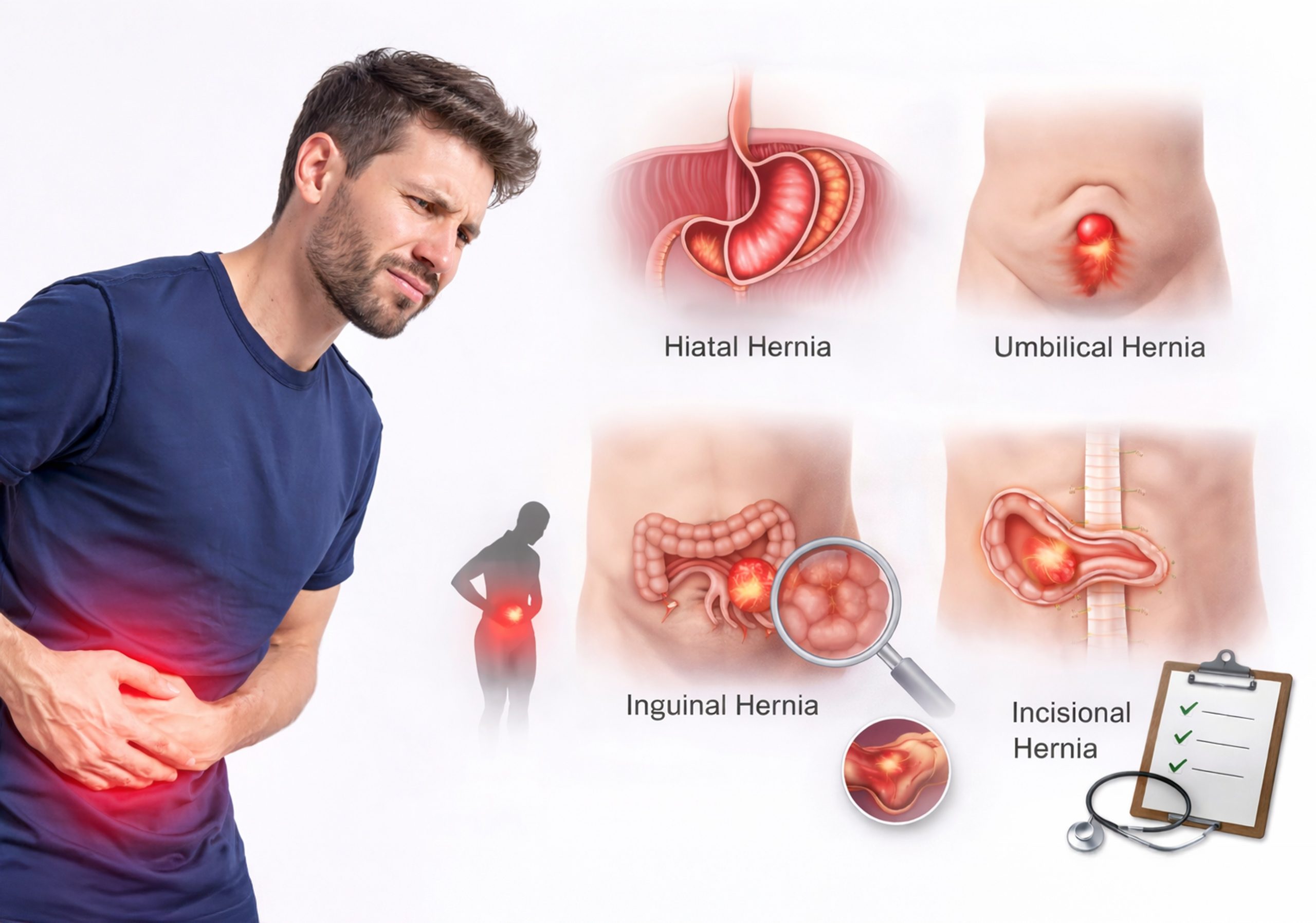
1. Inguinal Hernia (Groin Hernia) 

What It Is: Inguinal hernias are the most common type, accounting for approximately 75% of all hernias. They occur when tissue pushes through a weak spot in the inguinal canal, located in the groin area. 

Who Gets It: 

  • Predominantly affects men (25 times more common than in women) 
  • Can occur at any age, including infants 
  • More common in older adults 

Symptoms: 

  • Visible bulge in the groin area, especially when standing or coughing 
  • Burning, aching, or heavy sensation in the groin 
  • Pain that worsens with physical activity, lifting, or prolonged standing 
  • Swelling around the testicles in men 
  • Bulge that may disappear when lying down 
  • Discomfort that intensifies throughout the day 

Types: 

  • Direct inguinal hernia: Usually develops in older adults due to weakened abdominal muscles 
  • Indirect inguinal hernia: More common in younger people, often present from birth 

2. Femoral Hernia 

What It Is: Femoral hernias occur when tissue pushes through the femoral canal, just below the inguinal ligament in the upper thigh. 

Who Gets It: 

  • More common in women, especially pregnant or obese women 
  • Often affects older adults 
  • Less common than inguinal hernias but has higher complication rates 

Symptoms: 

  • Small bulge near the groin or top of the thigh 
  • Hip or groin pain that worsens with standing or lifting 
  • Abdominal discomfort 
  • Nausea and vomiting if bowel becomes trapped 
  • Often less noticeable than inguinal hernias 

Why It’s Serious: Femoral hernias have a higher risk of strangulation (when blood supply is cut off) and require prompt surgical attention. 

3. Umbilical Hernia (Belly Button Hernia) 

What It Is: Umbilical hernias develop when tissue protrudes through the abdominal wall near the belly button. 

Who Gets It: 

  • Common in infants (especially premature babies) 
  • Affects women more than men in adulthood 
  • Risk increases with pregnancy, obesity, and multiple pregnancies 

Symptoms: 

  • Visible bulge or swelling at the belly button 
  • Bulge becomes more prominent when crying, coughing, or straining (in infants) 
  • Mild discomfort or pain in adults 
  • Feeling of pressure at the belly button 
  • Nausea if intestine becomes trapped 

Special Note: In infants, small umbilical hernias often close naturally by age 1-2 years. However, adult umbilical hernias require surgical repair. 

4. Incisional Hernia 

What It Is: Incisional hernias develop at the site of a previous surgical incision where the abdominal wall has weakened. 

Who Gets It: 

  • Anyone who has had abdominal surgery 
  • Higher risk with obesity, infection, or poor wound healing 
  • Can develop months or years after surgery 

Symptoms: 

  • Bulge near or at the site of a previous surgical scar 
  • Pain or discomfort at the hernia site 
  • Bulge that increases in size over time 
  • Redness or discoloration if complications develop 
  • Aching sensation that worsens with activity 

Risk Factors: 

  • Infection at the surgical site 
  • Obesity 
  • Smoking 
  • Chronic cough 
  • Heavy lifting too soon after surgery 
  • Poor nutrition affecting wound healing 

5. Hiatal Hernia 

What It Is: A hiatal hernia occurs when part of the stomach pushes upward through the diaphragm into the chest cavity. 

Who Gets It: 

  • More common in people over 50 
  • Affects women more than men 
  • Associated with obesity and pregnancy 

Symptoms: 

  • Heartburn and acid reflux 
  • Chest pain or discomfort 
  • Difficulty swallowing 
  • Belching and bloating 
  • Shortness of breath 
  • Regurgitation of food or liquids 
  • Many people have no symptoms 

Types: 

  • Sliding hiatal hernia: Most common; the stomach and esophagus slide up into the chest 
  • Paraesophageal hiatal hernia: Less common but more serious; part of the stomach pushes through the diaphragm 

6. Epigastric Hernia 

What It Is: Epigastric hernias occur in the upper abdomen, between the belly button and the breastbone. 

Who Gets It: 

  • More common in men 
  • Can occur at any age 
  • Often multiple hernias develop 

Symptoms: 

  • Small, tender lump in the upper abdomen 
  • Pain in the upper abdomen, especially when straining 
  • May be pain-free and discovered incidentally 
  • Discomfort that comes and goes 

7. Spigelian Hernia 

What It Is: A rare hernia that develops along the edge of the abdominal muscle, typically below the belly button. 

Who Gets It: 

  • Uncommon (accounts for less than 2% of hernias) 
  • Usually occurs in adults aged 50-70 

Symptoms: 

  • Often difficult to detect visually 
  • Vague abdominal pain 
  • Change in bowel habits 
  • Intermittent bulge that may not be visible 
  • Higher risk of strangulation due to delayed diagnosis 

8. Obturator Hernia 

What It Is: An extremely rare hernia through the obturator canal in the pelvis. 

Who Gets It: 

  • Predominantly affects elderly, thin women 
  • Very rare (less than 1% of hernias) 

Symptoms: 

  • Inner thigh and groin pain 
  • Bowel obstruction symptoms 
  • Nausea and vomiting 
  • Often difficult to diagnose 
  • Pain that radiates down the inner thigh 

Recognizing Hernia Symptoms: When to Seek Medical Care 

While hernia symptoms vary by type and location, there are common warning signs that warrant medical attention. 

General Hernia Symptoms: 

  • Visible bulge or lump: Most noticeable when standing, coughing, or straining 
  • Discomfort or pain: Ranging from mild aching to severe pain 
  • Feeling of heaviness: Particularly in the groin or abdomen 
  • Burning or gurgling sensation: At the bulge site 
  • Weakness or pressure: In the affected area 
  • Bulge that disappears when lying down: Common in reducible hernias 

Emergency Symptoms Requiring Immediate Care: 

Seek emergency medical attention if you experience: 

  • Severe, sudden pain at the hernia site 
  • Inability to push the bulge back in (incarcerated hernia) 
  • Nausea and vomiting with abdominal pain 
  • Bulge becomes firm, tender, or discolored 
  • Inability to pass gas or have bowel movements 
  • Fever along with hernia symptoms 
  • Rapid heart rate or feeling faint 
  • Abdominal distension and severe pain 

These symptoms may indicate a strangulated hernia—a life-threatening emergency where blood supply to the trapped tissue is cut off. This requires immediate surgical intervention. 

Diagnosing Hernias at LLH Hospital Abu Dhabi 

At LLH Hospital, our General and Laparoscopic Surgery Department uses a comprehensive approach to diagnose hernias accurately and determine the most appropriate treatment plan. 

Clinical Examination 

Initial Assessment: Our experienced surgeons begin with a thorough physical examination that includes: 

  • Discussion of your medical history and symptoms 
  • Visual inspection of the affected area 
  • Palpation (gentle touch examination) to feel for bulges 
  • Asking you to cough or strain to make the hernia more prominent 
  • Assessment while standing and lying down 
  • Evaluation of hernia reducibility 

Advanced Diagnostic Imaging 

When needed, we utilize state-of-the-art imaging technology: 

Ultrasound: 

  • Non-invasive and radiation-free 
  • Excellent for groin hernias 
  • Can assess hernia contents and size 
  • Real-time imaging during movement 

CT Scan (Computed Tomography): 

  • Detailed cross-sectional images 
  • Ideal for complex or internal hernias 
  • Helps identify complications 
  • Useful for surgical planning 

MRI (Magnetic Resonance Imaging): 

  • Superior soft tissue visualization 
  • Useful for difficult-to-diagnose hernias 
  • No radiation exposure 
  • Particularly helpful for abdominal wall hernias 

X-rays: 

  • May be used to check for bowel obstruction 
  • Helpful in emergency situations 

Specialized Assessment 

For complex cases, our multidisciplinary approach may include: 

  • Consultation with gastroenterologists (for hiatal hernias) 
  • Pain specialists (for chronic pain assessment) 
  • Nutritionists (for obesity-related hernias) 
  • Physical therapists (for post-surgical recovery planning) 

Treatment Options: Modern Hernia Repair at LLH Hospital 

At LLH Hospital, we offer comprehensive hernia treatment ranging from watchful waiting to advanced laparoscopic surgery. Our approach is tailored to each patient’s specific condition, overall health, and lifestyle needs. 

Watchful Waiting 

When It May Be Appropriate: 

  • Very small, asymptomatic hernias 
  • Patients with significant medical conditions making surgery high-risk 
  • Minimal symptoms not affecting quality of life 

Important Note: Hernias do not heal on their own and will not disappear without treatment. Watchful waiting requires regular monitoring and most hernias will eventually require surgical repair. 

Surgical Repair: The Definitive Solution 

Surgery is the only permanent cure for hernias. At LLH Hospital, we specialize in both traditional open repair and advanced laparoscopic techniques. 

Laparoscopic Hernia Repair: Minimally Invasive Excellence 

LLH Hospital is a leader in minimally invasive laparoscopic hernia surgery, offering patients significant advantages over traditional open surgery. 

What is Laparoscopic Hernia Repair? 

Laparoscopic surgery uses small incisions (typically 5-10mm) through which a camera and specialized instruments are inserted. The surgeon views the procedure on high-definition monitors and repairs the hernia using surgical mesh to reinforce the weakened area. 

Advantages of Laparoscopic Surgery: 

Patient Benefits: 

  • Smaller incisions: Multiple tiny incisions instead of one large cut 
  • Less post-operative pain: Significantly reduced discomfort 
  • Faster recovery: Return to normal activities in 1-2 weeks 
  • Shorter hospital stay: Often same-day or next-day discharge 
  • Reduced infection risk: Smaller wounds mean lower infection rates 
  • Better cosmetic results: Minimal scarring 
  • Lower recurrence rates: Mesh reinforcement provides strong repair 
  • Quick return to work: Most patients resume work within 1-2 weeks 

Surgical Advantages: 

  • Better visualization of the hernia and surrounding anatomy 
  • Ability to check and repair hernias on both sides simultaneously 
  • Reduced trauma to surrounding tissues 
  • More precise mesh placement 

Types of Laparoscopic Hernia Repairs at LLH Hospital: 

TAPP (Trans-Abdominal Pre-Peritoneal) Repair: 

  • Approach through the abdominal cavity 
  • Excellent for bilateral hernias 
  • Allows complete visualization 

TEP (Totally Extra-Peritoneal) Repair: 

  • Does not enter the abdominal cavity 
  • Lower risk of bowel injury 
  • Ideal for recurrent hernias 

Laparoscopic Ventral/Incisional Hernia Repair: 

  • Minimally invasive approach for abdominal wall hernias 
  • Enhanced mesh fixation techniques 
  • Faster recovery than open repair 

Open Hernia Repair 

For certain patients and hernia types, traditional open surgery remains the best option. 

  • Very large hernias 
  • Recurrent hernias with previous mesh 
  • Emergency situations with bowel strangulation 
  • Patient preference or medical conditions precluding laparoscopy 
  • Limited access to the hernia site 

Open Repair Techniques: 

Lichtenstein Repair: 

  • Gold standard for inguinal hernia repair 
  • Uses mesh to reinforce the abdominal wall 
  • Performed under local or general anesthesia 
  • Time-tested with excellent long-term results 

Primary Tissue Repair: 

  • Suturing muscle layers without mesh 
  • Used for small hernias in specific situations 
  • Higher recurrence rates than mesh repair 

Component Separation: 

  • Advanced technique for large, complex hernias 
  • Releases abdominal wall muscles to achieve closure 
  • May be combined with mesh reinforcement 

Mesh vs. Non-Mesh Repair 

Mesh Repair: 

Advantages: 

  • Lower recurrence rates (1-3% vs. 10-20% without mesh) 
  • Stronger, more durable repair 
  • Less tension on tissues 
  • Faster recovery 

Types of Mesh: 

  • Synthetic (polypropylene, polyester) 
  • Biologic (derived from human or animal tissue) 
  • Composite (combination materials) 

Our surgeons select the most appropriate mesh based on hernia type, size, location, and individual patient factors. 

Non-Mesh Repair: 

When Considered: 

  • Contaminated or infected surgical fields 
  • Patient preference after thorough counseling 
  • Certain pediatric hernias 
  • Selected small hernias in young patients 

Meet Our Expert Hernia Surgery Team 

The General and Laparoscopic Surgery Department at LLH Hospital Abu Dhabi is staffed by highly skilled surgeons with extensive training and experience in hernia repair. 

Our Surgical Expertise: 

Advanced Training: 

  • Board-certified general surgeons 
  • Specialized fellowship training in laparoscopic surgery 
  • Years of experience performing hundreds of hernia repairs annually 
  • Continuous education in the latest surgical techniques 

Comprehensive Capabilities: 

  • All types of hernia repairs (inguinal, femoral, umbilical, incisional, hiatal) 
  • Both laparoscopic and open surgical approaches 
  • Emergency hernia surgery available 24/7 
  • Complex and recurrent hernia repairs 
  • Robotic-assisted surgery for select cases 

Patient-Centered Philosophy: Our surgeons understand that each patient is unique. We take time to: 

  • Listen to your concerns and answer all questions 
  • Explain your diagnosis in clear, understandable terms 
  • Discuss all treatment options, including risks and benefits 
  • Involve you in decision-making about your care 
  • Provide compassionate support throughout your treatment journey 

Why Choose LLH Hospital for Hernia Surgery? 

State-of-the-Art Facilities: 

  • Modern operating rooms equipped with advanced laparoscopic technology 
  • High-definition imaging systems for precision surgery 
  • Dedicated recovery areas with experienced nursing staff 

Multidisciplinary Care: 

  • Comprehensive pre-operative assessment 
  • Personalized post-operative care plans 

Proven Outcomes: 

  • High success rates with low complication rates 
  • Minimal recurrence rates 
  • Excellent patient satisfaction scores 

Convenient Location: 

  • Easily accessible in Abu Dhabi 
  • Ample parking and comfortable waiting areas 
  • Multilingual staff to serve diverse patient populations 

Schedule Your Hernia Consultation Today 

Don’t let a hernia hold you back from living your best life. The expert team at LLH Hospital’s General and Laparoscopic Surgery Department is ready to provide the comprehensive care you deserve. 

Take the First Step: 

Whether you’ve noticed a bulge, experienced discomfort, or want a second opinion, we’re here to help. 

Benefits of Early Consultation: 

  • Prevent complications 
  • Explore all treatment options 
  • Peace of mind with accurate diagnosis 
  • Plan surgery at a convenient time 
  • Faster, easier recovery with early treatment 

What to Expect at Your First Visit: 

  • Comprehensive evaluation by an experienced surgeon 
  • Discussion of your symptoms and medical history 
  • Physical examination 
  • Diagnostic imaging if needed 
  • Clear explanation of findings and recommendations 
  • Opportunity to ask questions 
  • Personalized treatment plan 

Contact LLH Hospital Abu Dhabi 

Department of General and Laparoscopic Surgery 

Call Now: 800 55 
Visit Our Website: www.llhhospital.com 

Easy Appointment Scheduling: 

  • Call our dedicated appointment line 
  • Walk-in consultations available 
  • Emergency care available around the clock 

Frequently Asked Questions About Hernias 

Q: Can a hernia go away on its own without surgery? 
A: No, hernias do not heal naturally and will not disappear without surgical repair. They typically grow larger over time and increase the risk of complications. 

Q: Is hernia surgery painful? 
A: With modern surgical techniques, especially laparoscopic surgery, post-operative pain is minimal and well-managed with medications. Most patients describe discomfort rather than severe pain. 

Q: How long do I need to stay in the hospital? 
A: For laparoscopic hernia repair, most patients go home the same day or the next morning. Open surgery may require 1-3 days depending on the complexity. 

Q: When can I return to work after hernia surgery? 
A: This depends on your job and the type of surgery. For desk jobs after laparoscopic surgery, most patients return within 1-2 weeks. Physically demanding jobs may require 4-6 weeks. 

Q: What is the success rate of hernia surgery? 
A: Modern hernia repair with mesh has a success rate of over 95%, with recurrence rates of only 1-3% when performed by experienced surgeons. 

Q: Can hernias recur after surgery? 
A: While rare with modern techniques (1-3% recurrence rate), hernias can return, especially if risk factors like obesity, chronic cough, or heavy lifting aren’t addressed. 

Q: Is mesh safe? Can I be allergic to surgical mesh? 
A: Surgical mesh used in hernia repair has been proven safe and effective over decades. True allergic reactions are extremely rare. Your surgeon will discuss mesh options and address any concerns. 

Q: Can I exercise after hernia surgery? 
A: Yes, but gradually. Light walking is encouraged immediately after surgery. More strenuous exercise should wait 4-6 weeks until tissues fully heal. 

Q: What if my hernia is very small and doesn’t bother me much? 
A: Even small hernias should be evaluated by a surgeon. While some small hernias can be monitored, they tend to grow over time and increase complication risks. 

Q: Are there any dietary restrictions after hernia surgery? 
A: Initially, you’ll start with light, easily digestible foods. Within a few days, most patients can resume a normal diet. High-fiber foods are recommended to prevent constipation. 

Q: Can I drive after hernia surgery? 
A: You can resume driving when you’re no longer taking narcotic pain medications and can comfortably perform emergency maneuvers. This is typically 3-7 days after laparoscopic surgery. 

Q: Will I have visible scars? 
A: Laparoscopic surgery results in minimal scarring—typically three to four small incisions of 5-10mm. Open surgery scars vary by location but are placed to minimize visibility. 

Don’t Wait—Take Control of Your Health Today 

A hernia won’t heal on its own, but with expert care from LLH Hospital’s General and Laparoscopic Surgery Department, you can get back to living life without limitations. Our experienced team uses the latest minimally invasive techniques to ensure the best possible outcomes with the fastest recovery. 

Our Experts

See More
Rajeev Gopalakrishnan
Rajani kanth (Yarram Rajani Kanth)
Prashant L Meshram
Dilip Thykkoottathil

Understanding Pelvic Pain: Causes, Symptoms & When to Seek Help

Pelvic pain is a common yet often misunderstood condition that affects both men and women. Whether it’s a dull ache that persists for weeks or sudden, sharp discomfort that disrupts your daily life, pelvic pain should never be ignored. At LLH Hospital Abu Dhabi, our experienced team of general and laparoscopic surgeons specializes in diagnosing and treating the underlying causes of pelvic pain with precision and compassion. 

In this comprehensive guide, we’ll explore everything you need to know about pelvic pain—from its various causes and symptoms to when you should seek immediate medical attention. 

What is Pelvic Pain? 

Pelvic pain refers to discomfort occurring in the lower abdomen, below the belly button and between the hips. It can range from mild and intermittent to severe and constant. The pain may be: 

  • Acute: Sudden onset, severe, and requiring immediate attention 
  • Chronic: Lasting for six months or longer 
  • Cyclical: Related to menstrual cycles in women 
  • Localized: Concentrated in one specific area 
  • Diffuse: Spread across the entire pelvic region 

Understanding the nature of your pelvic pain is the first step toward proper diagnosis and treatment. 

Common Causes of Pelvic Pain 

Pelvic pain can stem from various conditions affecting different organs and systems within the pelvic region. Here are the most common causes: 

1. Gastrointestinal Causes 

  • Irritable Bowel Syndrome (IBS) IBS is a common digestive disorder that can cause cramping, bloating, and pelvic discomfort. The pain often improves after bowel movements. 
  • Inflammatory Bowel Disease (IBD) Conditions like Crohn’s disease and ulcerative colitis cause chronic inflammation of the digestive tract, leading to persistent pelvic pain, diarrhea, and weight loss. 
  • Appendicitis Inflammation of the appendix typically begins with pain around the navel that migrates to the lower right abdomen. This is a surgical emergency requiring immediate attention. 
  • Diverticulitis Small pouches in the colon can become inflamed or infected, causing sharp pain in the lower left abdomen, fever, and changes in bowel habits. 

2. Urological Causes 

  • Urinary Tract Infections (UTIs) Bacterial infections in the bladder or urethra can cause pelvic pain, burning during urination, and frequent urges to urinate. 
  • Kidney Stones These hard mineral deposits can cause severe, cramping pain that radiates from the back to the lower abdomen and groin area. 
  • Bladder Disorders Conditions like interstitial cystitis or bladder inflammation can lead to chronic pelvic pain and urinary urgency. 

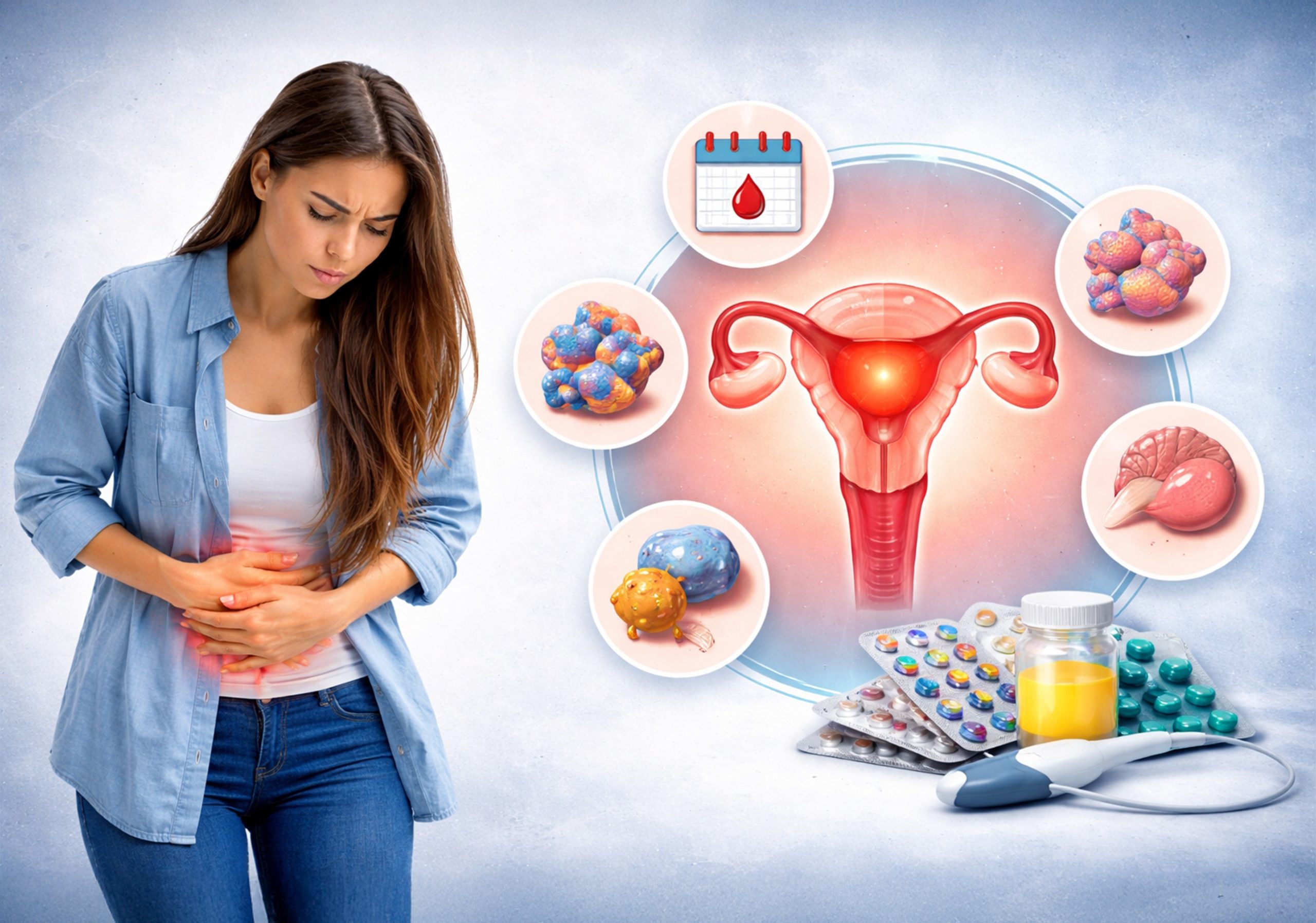
3. Reproductive System Causes 

In Women: 

  • Endometriosis: Tissue similar to the uterine lining grows outside the uterus, causing severe pain 
  • Ovarian cysts: Fluid-filled sacs on the ovaries that can rupture or twist 
  • Pelvic Inflammatory Disease (PID): Infection of the reproductive organs 
  • Uterine fibroids: Non-cancerous growths in the uterus 
  • Ectopic pregnancy: A life-threatening condition requiring immediate care 

In Men: 

  • Prostatitis: Inflammation of the prostate gland 
  • Testicular disorders: Including torsion or inflammation 
  • Epididymitis: Inflammation of the tube at the back of the testicle 

4. Musculoskeletal Causes 

  • Pelvic Floor Dysfunction Weakness or tension in the pelvic floor muscles can cause chronic pain, difficulty with bowel movements, and urinary issues. 
  • Hernias Inguinal or femoral hernias occur when tissue pushes through weak spots in the abdominal wall, causing a visible bulge and pain that worsens with activity. 
  • Muscle Strains Overuse or injury to abdominal or pelvic muscles can result in persistent discomfort. 

5. Other Causes 

  • Nerve entrapment: Trapped nerves in the pelvic region 
  • Adhesions: Scar tissue from previous surgeries 
  • Pelvic congestion syndrome: Varicose veins in the pelvis 
  • Psychological factors: Stress and anxiety can manifest as physical pelvic pain 

Recognizing the Symptoms: When Pelvic Pain Needs Attention 

While occasional mild pelvic discomfort may not be cause for alarm, certain symptoms warrant immediate medical evaluation. Pay attention to these warning signs: 

Seek Immediate Medical Care If You Experience: 

  • Severe, sudden pelvic pain that doesn’t improve 
  • Pain accompanied by fever (above 38°C/100.4°F) 
  • Heavy vaginal bleeding (in women) 
  • Visible bulge or lump in the groin or abdomen 
  • Inability to pass gas or have bowel movements 
  • Blood in urine or stool 
  • Vomiting along with abdominal pain 
  • Difficulty urinating or painful urination 
  • Pain during pregnancy (could indicate ectopic pregnancy) 
  • Pain after trauma or injury to the abdomen 

Schedule a Consultation If You Have: 

  • Chronic pain lasting more than six months 
  • Pain that interferes with daily activities 
  • Progressive worsening of symptoms 
  • Pain during intercourse 
  • Unexplained weight loss 
  • Changes in bowel or bladder habits 
  • Pain that radiates to the back or legs 

Diagnostic Approach at LLH Hospital Abu Dhabi 

At LLH Hospital, our General and Laparoscopic Surgery Department takes a comprehensive, patient-centered approach to diagnosing pelvic pain. Our process includes: 

1. Detailed Medical History 

Our surgeons begin with a thorough discussion of your symptoms, including: 

  • When the pain started 
  • Location and intensity of pain 
  • Factors that worsen or improve symptoms 
  • Associated symptoms 
  • Medical and surgical history 
  • Current medications 

2. Physical Examination 

A complete physical examination helps identify: 

  • Areas of tenderness 
  • Visible abnormalities like hernias 
  • Signs of inflammation or infection 
  • Muscle or nerve involvement 

3. Advanced Diagnostic Testing 

Based on your symptoms, we may recommend: 

Laboratory Tests: 

  • Complete blood count (CBC) 
  • Urinalysis and urine culture 
  • Pregnancy test (for women of childbearing age) 
  • Inflammatory markers 

Imaging Studies: 

  • Ultrasound: First-line imaging for pelvic organs 
  • CT scan: Detailed cross-sectional images for complex cases 
  • MRI: Superior soft tissue visualization 
  • X-rays: To evaluate bones and detect intestinal obstructions 

Specialized Procedures: 

  • Diagnostic laparoscopy: Minimally invasive camera examination of the pelvic cavity 
  • Colonoscopy or cystoscopy: When gastrointestinal or urological causes are suspected 

Treatment Options: From Conservative to Surgical Care 

Treatment for pelvic pain depends on the underlying cause, severity of symptoms, and impact on your quality of life. At LLH Hospital, we offer a full spectrum of treatment options: 

Conservative Management 

Medications: 

  • Pain relievers (NSAIDs, acetaminophen) 
  • Antibiotics for infections 
  • Hormonal therapy for endometriosis or menstrual-related pain 
  • Muscle relaxants for pelvic floor dysfunction 

Physical Therapy: 

  • Pelvic floor physical therapy 
  • Stretching and strengthening exercises 
  • Biofeedback techniques 

Lifestyle Modifications: 

  • Dietary changes for digestive causes 
  • Stress management techniques 
  • Heat therapy 
  • Regular exercise 

Minimally Invasive Laparoscopic Surgery 

When surgical intervention is necessary, LLH Hospital specializes in advanced laparoscopic techniques that offer significant advantages: 

Benefits of Laparoscopic Surgery: 

  • Smaller incisions (typically 5-10mm) 
  • Less post-operative pain 
  • Reduced risk of infection 
  • Shorter hospital stays 
  • Faster recovery and return to normal activities 
  • Minimal scarring 
  • Better cosmetic results 

Common Laparoscopic Procedures: 

  • Hernia repair (inguinal, femoral, ventral) 
  • Appendectomy 
  • Treatment of endometriosis 
  • Ovarian cyst removal 
  • Adhesiolysis (removal of scar tissue) 
  • Diagnostic laparoscopy for unexplained pain 

Open Surgical Procedures 

For complex cases or emergencies, traditional open surgery may be necessary. Our experienced surgeons are skilled in both approaches and will recommend the best option for your specific condition. 

Meet Our Expert General and Laparoscopic Surgery Team 

LLH Hospital Abu Dhabi is proud to house a team of highly qualified surgeons specializing in general and laparoscopic surgery. Our department is equipped with state-of-the-art technology and staffed by compassionate professionals dedicated to your wellbeing. 

Why Choose LLH Hospital for Pelvic Pain Treatment? 

  • Experienced Surgical Team Our surgeons have extensive training and years of experience in diagnosing and treating complex pelvic conditions. They stay current with the latest surgical techniques and technologies. 
  • Multidisciplinary Approach We collaborate with gastroenterologists, urologists, gynecologists, and pain specialists to provide comprehensive care tailored to your specific needs. 
  • Advanced Laparoscopic Facilities Our operating rooms are equipped with cutting-edge laparoscopic equipment, allowing our surgeons to perform complex procedures with precision and minimal invasiveness. 
  • Patient-Centered Care We understand that pelvic pain can significantly impact your quality of life. Our team takes time to listen to your concerns, explain your diagnosis clearly, and involve you in treatment decisions. 
  • Comprehensive Support From diagnosis through recovery, our dedicated nursing staff and support team ensure you receive compassionate care every step of the way. 

Preventing Pelvic Pain: Proactive Health Steps 

While not all causes of pelvic pain are preventable, you can take steps to reduce your risk: 

  1. Maintain a healthy weight to reduce strain on pelvic structures 
  1. Practice good hygiene to prevent urinary and reproductive tract infections 
  1. Stay hydrated to support urinary health 
  1. Exercise regularly to strengthen core and pelvic floor muscles 
  1. Manage stress through relaxation techniques 
  1. Attend regular check-ups for early detection of issues 
  1. Address constipation promptly to prevent straining 
  1. Use proper lifting techniques to avoid hernias 
  1. Seek prompt treatment for infections or injuries 

When to Contact LLH Hospital 

Don’t let pelvic pain control your life. If you’re experiencing persistent or severe pelvic discomfort, the General and Laparoscopic Surgery Department at LLH Hospital Abu Dhabi is here to help. 

Contact us if you: 

  • Have unexplained pelvic pain lasting more than a few days 
  • Experience severe or worsening symptoms 
  • Notice a bulge or mass in your abdomen or groin 
  • Have concerns about your digestive or urinary health 
  • Want a second opinion on your diagnosis 

Frequently Asked Questions About Pelvic Pain 

Q: How long should I wait before seeing a doctor about pelvic pain? 
A: If you experience severe pain, fever, or other warning signs, seek immediate care. For mild, persistent pain, schedule an appointment if symptoms last more than a week or interfere with daily activities. 

Q: Can stress cause pelvic pain? 
A: Yes, stress and anxiety can contribute to or worsen pelvic pain through muscle tension and heightened pain perception. However, it’s important to rule out physical causes first. 

Q: Is laparoscopic surgery safe? 
A: Laparoscopic surgery is considered very safe and has a lower complication rate than traditional open surgery. Our experienced surgeons at LLH Hospital have performed thousands of successful laparoscopic procedures. 

Q: Will I need to stay overnight in the hospital? 
A: This depends on your procedure. Many laparoscopic surgeries allow same-day or next-day discharge, while more complex procedures may require a longer stay. 

Q: How can I prepare for my appointment? 
A: Keep a pain diary noting when pain occurs, its intensity, and any triggers. List all medications you’re taking and prepare questions for your surgeon. 

Q: Does insurance cover pelvic pain treatment? 
A: Most insurance plans cover medically necessary diagnostic tests and treatments for pelvic pain. Our administrative team can help verify your coverage. 

At LLH Hospital Abu Dhabi, we’re committed to providing world-class surgical care in a compassionate, patient-focused environment. Don’t suffer in silence—reach out today and let us help you find relief from pelvic pain. 

Schedule Your Consultation Today 

Our Experts

See More
Rajeev Gopalakrishnan
Rajani kanth (Yarram Rajani Kanth)
Prashant L Meshram
Dilip Thykkoottathil

Can Diabetic Retinopathy Be Reversed? Latest Treatments

Introduction — Why Your Eyes Deserve the Spotlight 

You know how diabetes demands attention like that clingy friend who always wants to hang out? Well — your eyes are one of the first to notice when blood sugar doesn’t behave. Among the many silent complications, Diabetic Retinopathy (DR) is particularly sneaky: often painless, slowly creeping in, and can rob you of vision before you even realize something’s off. 

But here’s the hopeful bit: with early detection, proper care, and timely treatment — especially at a care centre like LLH Hospital, Abu Dhabi — you might not just stall DR, you could protect, preserve, and in some cases partially restore vision. So, the real question: Is DR reversible or at least manageable? And what treatment paths should you know about? Let’s dive in — with clarity, care, and a dose of hope. 

What Happens in Diabetic Retinopathy (DR) — Causes & Symptoms 

  • DR arises when long-term high blood sugar damages the tiny blood vessels in the retina, the light-sensing tissue at the back of your eye. Over time, these vessels become leaky or blocked, and the retina gets starved of oxygen.  
  • In early stages, you may not notice any problem — no blurriness, no pain. That’s the sneaky part.  
  • As Diabetic Retinopathy advances, symptoms can emerge blurred vision, dark or floating spots, impaired night vision or reduced contrast, and sometimes sudden vision loss if bleeding occurs.  
  • DR isn’t always alone — diabetes also ups the risk for Glaucoma (especially the “open-angle” and neovascular types), meaning many diabetics need a dual eye-care focus.  

So yes — DR is subtle at first. But if left unchecked, retina + nerve + blood-vessel damage can be combined to threaten vision for good. 

Can Diabetic Retinopathy Be Reversed? Here’s the Reality 

  • The hard truth: once DR has advanced — with significant retinal scarring, bleeding, new fragile blood vessels, or retinal detachment — full reversal is rarely possible.  
  • But — and this is the silver lining — if detected early and managed promptly, many of the harmful changes can be halted, slowed or sometimes partially improved. Treatment can stop further damage, reduce vision-threatening complications, and in some cases, stabilize or modestly restore vision.  
  • In other words: think of it as controlling a storm rather than curing permanent scarring. Once damage is extensive, it becomes more about preserving what remains, not rewriting what’s lost.  

How DR (and Glaucoma) Are Treated — What Works Today 

At LLH Hospital’s Ophthalmology department, patients get access to contemporary, evidence-based interventions. These include: 

  • Strict diabetes, blood pressure & cholesterol control — the foundation. Stabilizing systemic health slows DR’s progression and reduces risk for glaucoma too.  
  • Anti-VEGF injections & steroid injections — these target abnormal vessel growth and leaking, useful especially if there’s swelling (e.g. macular edema) or early proliferative changes.  
  • Laser therapy (pan-retinal photocoagulation or focal laser) — helps seal or shrink diseased retinal blood vessels to prevent further bleeding and vessel proliferation. This is among the most widely used treatments for DR.  
  • Surgical intervention (vitrectomy) — in advanced cases where there’s persistent bleeding inside the eye or scar-induced retinal detachment. This removes the vitreous gel, clears hemorrhage, and restores retinal anatomy as much as possible. 
  • Comprehensive eye exams & regular screening — probably the most under-rated tool. Early detection can dramatically improve outcomes. Annual dilated retinal exams are highly recommended for diabetics.  

When DR and glaucoma risk overlap (as often happens in diabetics), managing both together becomes critical — controlling eye pressure, monitoring optic nerve health and retina status simultaneously.  

Meet the Experts at LLH Hospital, Abu Dhabi 

LLH doesn’t just offer generic care — it brings a team of experienced, fellowship-trained ophthalmologists and retina-specialists who are well-versed in managing complex diabetic eye diseases.  

  • Dr. Soumya Kanakatte Sathyanarayan — Glaucoma-fellowship trained specialist with nearly a decade of experience in glaucoma surgery and comprehensive eye care at LLH. 
  • Dr. Ramya Appanraj — Vitreoretinal surgeon with advanced training in retinal imaging and vitreoretinal surgical techniques — ideal for managing DR, retinal detachments, hemorrhages, and other serious retinal conditions.  
  • Plus several other qualified ophthalmologists and specialists under LLH’s Ophthalmology wing — ensuring you get tailored, up-to-date eye care.  

If you are diabetic, or already have signs of vision changes — LLH’s eye department is well-equipped to screen, diagnose, and manage DR (and associated risks like glaucoma) effectively. 

What You Can Do — Practical Steps if You’re Diabetic 

  1. Schedule a dilated retina exam at least once a year — even if vision feels normal. Early detection is your best defense. 
  1. Keep blood sugar, blood pressure, and cholesterol under control. A stable metabolic profile reduces risk of DR progression and glaucoma. 
  1. If diagnosed with early Diabetic Retinopathy – follow doctor’s advice on injections, laser therapy or monitoring. Don’t wait for symptoms. 
  1. If you notice blurred vision, floaters, dark spots – treat it as a red flag. Visit an ophthalmologist, preferably at a specialized centre like LLH. 
  1. Don’t panic if DR is diagnosed – modern treatments can often preserve, stabilize or even partially restore vision. 

Conclusion — Hope Is Real, Vision is Precious 

Here’s the deal – diabetic retinopathy isn’t a death sentence for your eyesight. It’s more like a storm warning. With the right care, timely treatment and a sharp eye (pun intended) on your health, that storm can be weathered. 

At LLH Hospital, Abu Dhabi, with skilled ophthalmologists like Dr. Soumya Kanakatte Sathyanarayan and Dr. Ramya Appanraj, advanced retinal care facilities, and a commitment to personalized treatment — you have a fighting chance. 

So if you have diabetes, don’t wait for symptoms to speak up. Schedule an eye exam now, treat early, and let yourself believe in vision — not because you have to — but because you deserve it. After all, life looks better in sharp focus, doesn’t it? 

Our Experts

See More
Ramya Appanraj
Soumya Kanakatte Sathyanarayan

New Era of Glaucoma Treatment: Understanding Minimally Invasive Glaucoma Surgery(MIGS)

Glaucoma is often called the “silent thief of sight” because it typically progresses without warning or noticeable symptoms until significant, irreversible vision loss has occurred. Affecting millions worldwide, effective management is crucial to preserving sight. 

Fortunately, the field of ophthalmology is undergoing a revolution, moving away from older, more invasive procedures toward safer, quicker alternatives. At LLH Hospital Abu Dhabi, we are proud to offer these Minimally Invasive Glaucoma Surgery (MIGS) options, signaling a new era in compassionate, high-tech eye care. 

Understanding the “Silent Thief”: Glaucoma Basics 

Glaucoma refers to a group of eye diseases that damage the optic nerve, the crucial bundle of nerve fibers connecting the eye to the brain. This damage is most often caused by abnormally high pressure inside your eye (Intraocular Pressure or IOP). 

What Causes Glaucoma? 

In most common forms of glaucoma (like Primary Open-Angle Glaucoma), the inner eye fluid (aqueous humor) does not drain properly. While the eye continues to produce fluid, the outflow channels get slowly clogged over time, leading to a dangerous buildup of pressure. 

Common Symptoms of Glaucoma

The reason glaucoma is so dangerous is that early-stage symptoms are usually absent. By the time patients notice them, the damage is already severe: 

  • No early pain or discomfort. 
  • Gradual loss of peripheral (side) vision—this is often missed until later stages. 
  • In very advanced cases, tunnel vision or eventual blindness. 

The Evolution of Glaucoma Treatment 

Traditionally, glaucoma treatment followed a stepped approach: 

  1. Medicated Eye Drops: Used daily to lower IOP by reducing fluid production or increasing drainage. Compliance is a major challenge for many patients. 
  1. Laser Procedures (e.g., SLT): Used to improve the natural drain. 
  1. Traditional Surgery (e.g., Trabeculectomy): Effective for advanced disease, but more invasive and associated with longer recovery times and higher risks of complications. 

The New Era: Minimally Invasive Glaucoma Surgery (MIGS) 

MIGS procedures have emerged to fill the gap between medications/laser and traditional surgery. They are designed to be safer, quicker, and require minimal tissue disruption, preserving the eye’s natural anatomy. 

What Makes MIGS a Game-Changer? 

Feature MIGS (New Era) Traditional Surgery 
Invasiveness Minimal (micro-incisions) Significant (requires full incision) 
Safety Profile High Safety, Low Risk of Severe Complications Higher Risk of Post-Operative Issues 
Recovery Time Fast—Often days or weeks Weeks to months 
Medication Need Often significantly reduced or eliminated Variable 
Cataract Surgery Can be performed simultaneously (Combo Surgery) Usually separate procedures 

MIGS works by inserting microscopic devices (stents) or using tiny instruments to target the clogged drainage channels, often performed through a small incision made during cataract surgery. 

  • Micro-Stents (e.g., iStent, Hydrus): These tiny implants are placed directly into the eye’s natural drain to bypass resistance and restore fluid outflow, effectively acting as microscopic shunts. 
  • Trabecular Bypass Procedures: Techniques that remove or bypass the clogged portion of the drainage system to enhance flow. 

Expert Glaucoma Care at LLH Hospital, Abu Dhabi 

At LLH Hospital, Abu Dhabi our commitment to comprehensive eye health means integrating the most advanced technology with expert medical judgment. 

Comprehensive Glaucoma Management 

Our experienced eye doctors and surgeons offer a full spectrum of care, ensuring a personalized treatment plan for every stage of the disease: 

  • Advanced Diagnostics: Utilizing state-of-the-art imaging like Optical Coherence Tomography (OCT) and specialized visual field testing for the earliest possible detection of optic nerve damage. 
  • Personalized Treatment: Offering everything from medical therapy and laser treatments to the latest MIGS procedures and traditional surgery when necessary. 
  • Seamless Integration: For patients requiring both cataract surgery and glaucoma treatment, we frequently perform MIGS as a “combo procedure,” reducing the number of surgeries and accelerating recovery. 

Our Experts

See More
Ramya Appanraj
Soumya Kanakatte Sathyanarayan