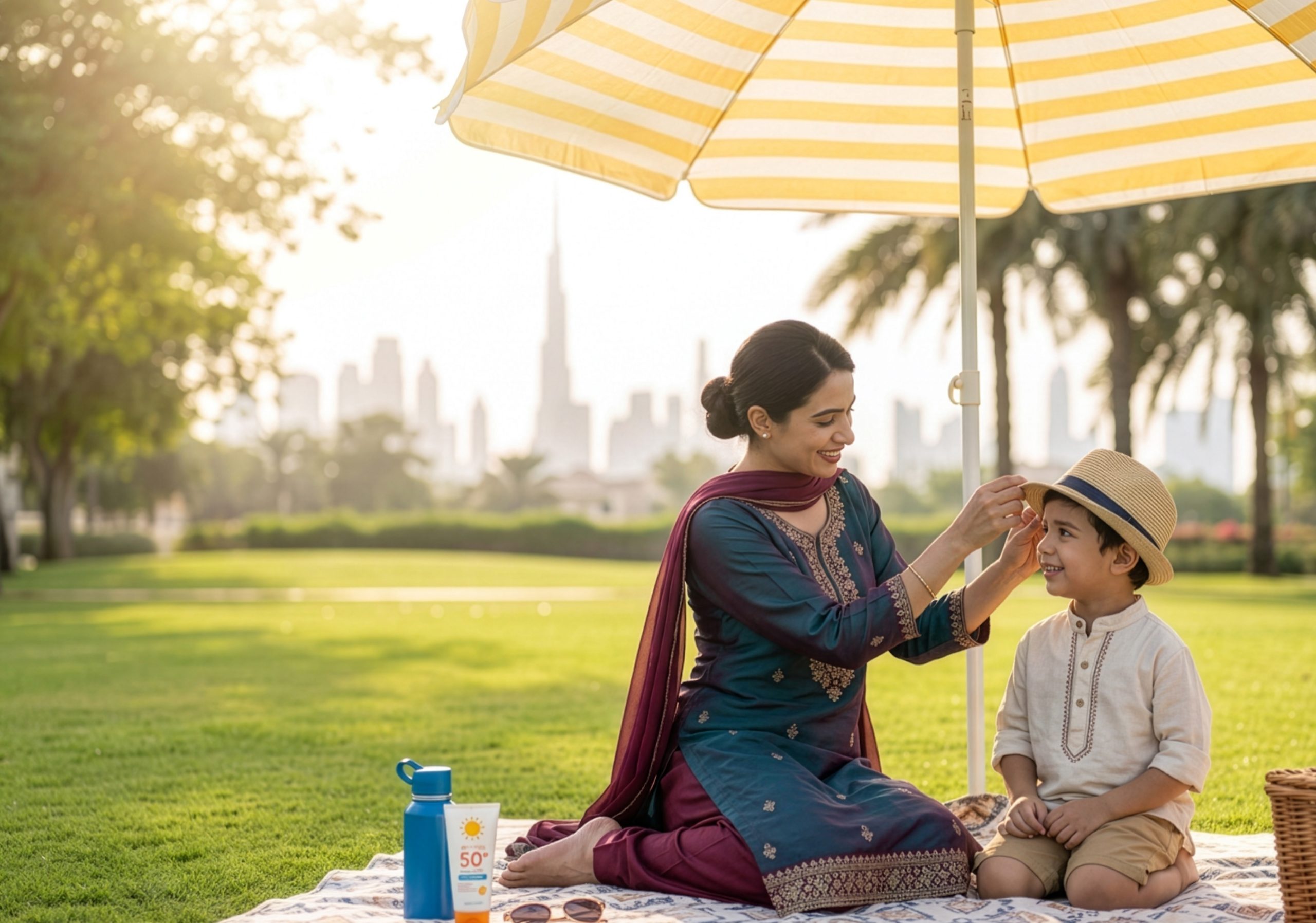
Living in the UAE means enjoying sunshine almost year-round—but for children, especially during peak summer months, extreme heat can pose serious health risks. With temperatures often soaring above 40°C, protecting little ones from heat-related illnesses becomes essential. Pediatric doctors emphasize that children are more vulnerable to the effects of heat, making sun safety a top priority for every parent.
Heat Stroke in Children: Why Are They More at Risk?
Children’s bodies are not as efficient as adults when it comes to regulating temperature. They sweat less, which makes it harder for their bodies to cool down quickly. Additionally, kids are often too engaged in play to notice early signs of overheating or dehydration. This is why pediatricians stress the importance of proactive care rather than reactive treatment during hot weather.
Heat exhaustion and heat stroke are among the most serious concerns. While heat exhaustion can cause symptoms like fatigue, dizziness, and nausea, heat stroke is a medical emergency that requires immediate attention. Understanding how to prevent these conditions is key to keeping children safe.
Recognizing the Warning Signs
Early identification can prevent complications. Parents should watch for:
- Excessive sweating or very dry skin
- Unusual tiredness or irritability
- Headache or dizziness
- Nausea or vomiting
- Rapid heartbeat
- High body temperature
If a child shows signs such as confusion, fainting, or stops sweating despite the heat, it could indicate heat stroke—seek medical help immediately.
1. Hydration: The First Line of Defense
Pediatricians consistently highlight hydration as the most effective way to prevent heat-related illnesses. Children should be encouraged to drink water frequently, even if they don’t feel thirsty.
- Offer water every 20–30 minutes during outdoor play
- Avoid sugary or caffeinated drinks, as they can increase dehydration
- Include water-rich foods like watermelon, cucumber, and oranges
For younger children, parents should closely monitor fluid intake, as they may not communicate thirst clearly.
2. Smart Sun Exposure
Timing is crucial when it comes to outdoor activities. The sun is strongest between 10 AM and 4 PM, making it safer for children to play early in the morning or after sunset.
When stepping outdoors:
- Dress children in lightweight, loose-fitting, and light-colored clothes
- Use a wide-brimmed hat to protect the face and neck
- Apply broad-spectrum sunscreen (SPF 30 or higher) and reapply every two hours
- Encourage play in shaded areas whenever possible
These simple precautions significantly reduce the risk of sunburn and overheating.
3. Choosing Safe Summer Activities
During UAE summers, indoor activities are often the safest option. Pediatric experts recommend balancing screen time with engaging indoor play such as arts and crafts, reading, or interactive games.
If outdoor play is necessary:
- Keep sessions short and supervised
- Ensure access to shade and hydration
- Plan water-based activities like swimming under supervision
Limiting high-intensity physical activity during extreme heat can prevent exhaustion and maintain energy levels.
Importance of Proper Nutrition
A child’s diet also plays a role in coping with heat. Light, nutritious meals are easier to digest and help maintain energy.
- Include fresh fruits and vegetables
- Avoid heavy, oily, or overly spicy foods
- Provide small, frequent meals instead of large portions
A well-balanced diet supports the body’s natural ability to manage heat stress.
- Creating a Cool Environment:
At home, maintaining a cool indoor environment is equally important. Keep rooms well-ventilated and air-conditioned. Dress children in breathable fabrics even indoors. Ensure they get adequate rest, as fatigue can worsen heat sensitivity.
For infants and toddlers, never leave them in parked cars—even for a few minutes—as temperatures can rise dangerously fast.
When to Consult a Pediatrician?
If your child experiences repeated dehydration, unusual fatigue, or any signs of heat-related illness, it is important to consult a pediatric doctor. Early medical guidance can prevent complications and provide personalized advice based on your child’s health needs.
A Safer Summer for Little Ones
The UAE summer can be challenging, but with the right precautions, children can stay safe and healthy. Sun safety is not just about avoiding the heat—it’s about building habits that protect and nurture a child’s wellbeing.
By focusing on hydration, smart sun exposure, proper nutrition, and regular monitoring, parents can help their little ones enjoy the season without unnecessary risks. Heat-related illness can escalate quickly in children, so it always helps to have expert support close by. The experienced pediatricians at LLH Hospital Abu Dhabi and Al Ain, along with the pediatric teams across LLH Medical Centers, are available to guide families through every stage of childhood health—from routine check-ups to urgent summer concerns like dehydration and heat exhaustion.
If your child shows signs of heat-related illness or you simply want personalized guidance on keeping them safe this summer, book an appointment with a pediatrician at LLH Hospital Abu Dhabi, LLH Hospital Al Ain, or your nearest LLH Medical Center. With the right knowledge and trusted medical support, every family can turn a hot summer into a safe and happy one.
Frequently Asked Questions (FAQs)
Temperatures above 40°C, common during UAE summers, can put children at risk of dehydration, heat exhaustion, and heat stroke. Pediatricians recommend limiting outdoor activity between 10 AM and 4 PM, when the sun is strongest.
Heat exhaustion typically causes fatigue, dizziness, and nausea, while heat stroke is more severe and may involve confusion, fainting, or a sudden stop in sweating despite the heat. Heat stroke is a medical emergency and needs immediate attention.
Children should be offered water every 20 to 30 minutes during outdoor play, even if they don’t feel thirsty. Water-rich foods such as watermelon, cucumber, and oranges can also help maintain hydration, while sugary or caffeinated drinks should be avoided.
Early mornings or after sunset are safest, since the sun is strongest between 10 AM and 4 PM. If outdoor play during this window is unavoidable, keep sessions short, supervised, and shaded, with easy access to water.
Yes. Consistent hydration, lightweight clothing, sunscreen, shaded play, and avoiding peak-sun hours significantly lower the risk. Never leave infants or toddlers in parked cars, even briefly, as temperatures can rise dangerously fast.
Yes, sunscreen is essential given the UAE’s intense year-round sun. Use a broad-spectrum sunscreen with SPF 30 or higher, reapply every two hours, and pair it with a wide-brimmed hat and lightweight, light-colored clothing for extra protection.
Consult a pediatrician if your child shows repeated dehydration, unusual fatigue, persistent vomiting, or any signs of heat stroke such as confusion or fainting. The pediatric teams at LLH Hospital Abu Dhabi, LLH Hospital Al Ain, and LLH Medical Centers can provide prompt evaluation and personalized care.